Denver’s Universal Recycling and Composting Ordinance (URCO) takes effect September 1, 2026. The citywide rules expand access to recycling and composting beyond single-family homes and establish diversion requirements for apartments, businesses, food establishments, permitted events, and qualifying construction and demolition projects.
This guide explains what the ordinance means in plain language for Denver residents, renters, property managers, business owners, event organizers, contractors, junk haulers, and waste service providers. It is a practical starting point, not a substitute for the City and County of Denver’s current rules. When a requirement affects your property or project, use the official Denver guidance linked throughout this article as the final authority.
What Is Denver’s URCO?
URCO is Denver’s Universal Recycling and Composting Ordinance. It was approved by 70% of Denver voters in November 2022 as part of the city’s effort to conserve natural resources and divert more material away from landfills. Denver City Council later approved updates to the ordinance on September 15, 2025, creating the timelines and requirements that begin taking effect in 2026.
The important date for most people is September 1, 2026. Starting on that date, the ordinance expands the properties and activities that must make recycling and/or composting available, and it adds recycling and reuse requirements for certain construction and demolition work.
URCO is not one single rule that applies identically to every address. The requirements depend on what happens at the property:
- A large apartment building has different obligations from a single-family home.
- A restaurant or food producer has different compost responsibilities from a typical office.
- A public event has a different planning process from a permanent commercial building.
- A permitted renovation has different material-diversion obligations from ordinary household cleanup.
That distinction is why the first step is always identifying which URCO category applies to you.
Who Is Covered by URCO?
Denver’s official URCO overview identifies five major groups. Some properties may fit more than one category.
1. Multifamily residential buildings
URCO applies to most multifamily residential properties with eight or more units. This includes many apartment buildings, condominium communities, manufactured-home communities, and congregate or boarding homes. The property owner or manager generally has to make the required services available at the property, while residents and tenants need clear instructions for using the containers correctly.
Denver’s guidance distinguishes qualifying multifamily properties from some townhomes and rowhomes that already have an account with Denver Solid Waste Management. If you manage a property near the threshold or are unsure whether the property is classified as a multifamily premises, confirm the classification with the city rather than guessing.
2. Non-residential buildings
Offices, retail properties, warehouses, and other non-residential buildings must offer recycling services for tenants, employees, and contractors at the property. The building’s owner or manager is responsible for making the service available and providing the information needed for proper sorting.
This matters even when a business leases space. A tenant may be responsible for using the system properly, but the property’s service and container setup can be a building-level responsibility. Owners, managers, and tenants should clarify who orders service, maintains the containers, posts signs, and communicates changes.
3. Food businesses and food-waste producers
Licensed retail food establishments and certain licensed commissary, food-processing, wholesale, and warehouse establishments have additional responsibilities. Denver’s overview says these businesses must provide:
- Recycling for customers, employees, and contractors
- Composting for employees and contractors
A food business should plan for the entire flow of material, not just place a green cart in a back-of-house area. Customer-facing recycling, employee food-scrap collection, back-of-house storage, signage, pickup frequency, and contamination control all affect whether the system works in practice.
4. Permitted events
Permitted events with more than 350 daily attendees that occur on public property and require a city permit must offer recycling and composting. Event organizers should plan ahead: Denver’s guidance says the necessary plans and forms should be filed at least 45 days before the event.
For an event, compliance is about more than renting extra containers. Organizers need to decide where stations go, how they will be labeled, who monitors contamination, how volunteers or staff will answer sorting questions, and how collected material will be handled after the event.
5. Construction and demolition projects
URCO also applies to many permitted construction and demolition projects, including:
- New construction or demolition projects larger than 500 square feet that require a city permit
- Interior remodel projects larger than 2,500 square feet that require a city permit
These projects must meet Denver’s requirements for reuse and recycling of debris and materials. That makes waste planning part of the project scope from the beginning — not a task to improvise after dumpsters are already full.

What Changes on September 1, 2026?
For many Denver residents, the most visible change will be at an apartment or condominium property. A person who has never had convenient recycling or composting access at home may see new carts, dumpsters, signs, and sorting instructions.
For property managers and businesses, September 1 is the date by which the required services and systems need to be in place. The practical work starts earlier:
- Identify which URCO category applies to the property, business, event, or project.
- Review current trash, recycling, and compost service levels.
- Order or adjust containers and pickup frequency.
- Install durable labels and sorting guidance.
- Train employees, contractors, tenants, residents, or event staff.
- Create a routine for keeping containers clean and correcting contamination.
- Keep service records, education records, plans, and other documentation together.
The ordinance is designed around service availability and diversion, so a property that technically has a container but cannot keep it accessible, identifiable, or regularly serviced may still have a practical compliance problem.
What Multifamily Property Managers Need to Do
Denver’s multifamily checklist breaks readiness into a series of operational steps. Here is what those steps mean in day-to-day property management.
Start or adjust recycling and composting service
Review the property’s existing waste contract and confirm what materials the hauler accepts, how much container capacity is available, and how frequently each stream is collected. A building adding composting for the first time may need more frequent service than it expects, particularly if food scraps are stored indoors or if the property has restaurants or shared amenity spaces.
Ask the hauler about container sizes, pickup schedules, contamination rules, overflow procedures, and whether the contract includes cleaning or replacement service. Put the answers in writing so the onsite team has a consistent process.
Make each stream easy to identify
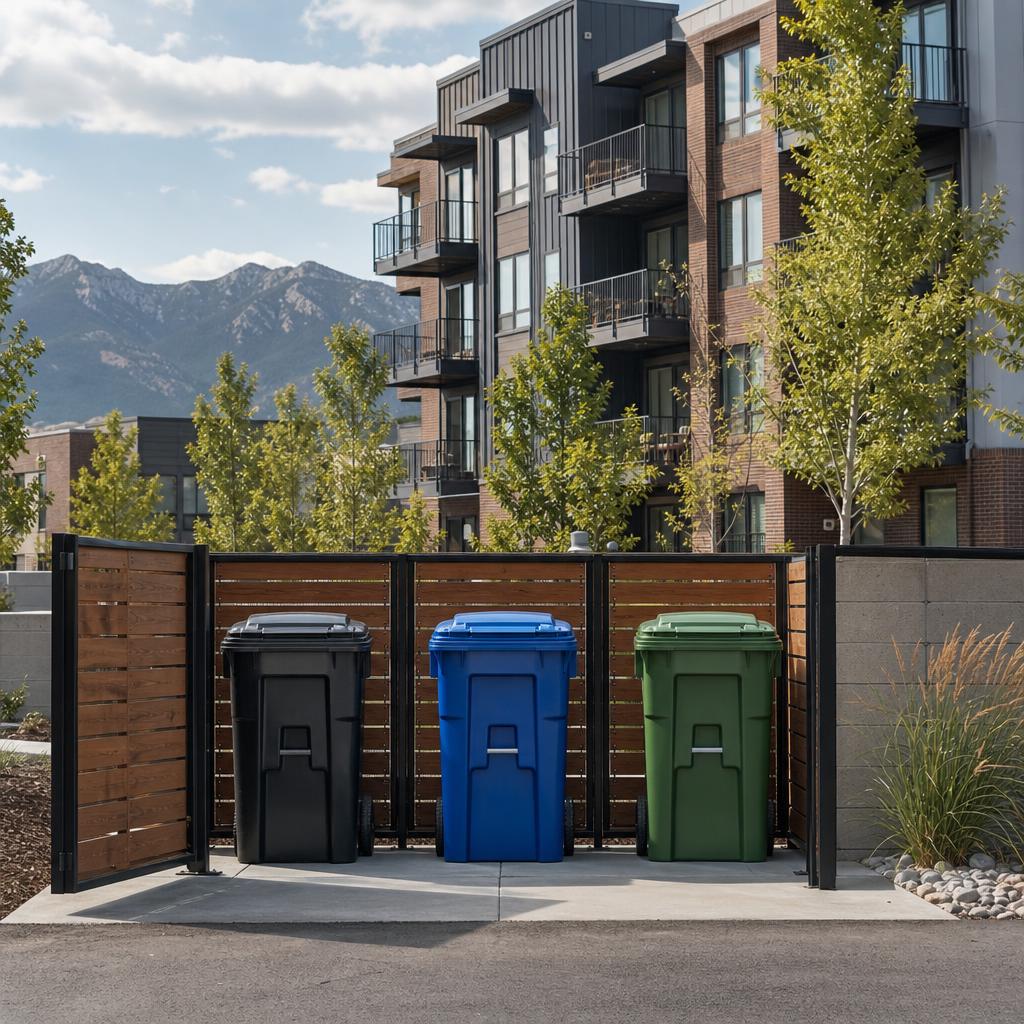
Containers should be easy to find and easy to distinguish. Denver’s guidance calls for clear identification of the waste streams, including labels for recycling and compost. Sorting signs should be visible at the point where residents, employees, and contractors make the decision about where an item goes.
Do not rely only on color. Color can fade, containers can move, and residents may have different expectations from previous buildings. Pair the color with plain language, icons, and examples of accepted and rejected material.
Post current guidance in English and Spanish
Multifamily properties need paper, laminated, or sticker guidelines that explain what belongs in each container. Denver’s checklist calls for guidance in English and Spanish, and it says outdated or damaged guidance should be replaced as soon as possible.
Post the information where residents actually see it: next to the waste room, above the collection carts, near mail areas, and in move-in materials. A sign hidden in a leasing office will not prevent contamination at the dumpster.
Keep containers and pads clean
Food residue, leaking bags, and overflowing carts create odor, pest, and contamination problems. Denver’s checklist emphasizes regular cleaning of carts, dumpsters, compactors, and the surrounding pad. If containers are shared with neighboring businesses or properties, decide who is responsible for the cleaning schedule.
Never send dirty wash water onto an outdoor surface or into a storm drain. Use the disposal method described in Denver’s official cleaning guidance, and ask whether your waste hauler includes container cleaning in the service contract.
Educate current and future residents
Property managers should plan for both the initial rollout and ongoing move-in education. Denver’s multifamily checklist calls for the city’s informational notice to be posted and distributed, with sorting education for residents, employees, contractors, and other relevant people in the building.
The checklist identifies these important timing expectations:
- Current tenants, residents, employees, and contractors: education by November 30, 2026
- New tenants and residents: within 30 days after move-in
- New employees and contractors: within 30 days after starting
- When services or accepted materials change: updated information within 30 days
Keep a copy of notices, handouts, digital messages, and dates of distribution. Documentation makes it easier to answer questions and correct gaps if staff changes.
What Residents and Renters Should Expect
URCO is primarily implemented through properties, businesses, event organizers, and project owners rather than through a new individual permit for every resident. If you rent in a qualifying apartment or multifamily property, look for:
- A recycling container or dumpster that is accessible to residents
- A compost container or service where required
- Signs showing what belongs in each stream
- English and Spanish sorting information
- Instructions from your property manager about special items and contamination
Your most important role is to follow the property’s sorting instructions and report practical problems — a locked enclosure, overflowing carts, missing labels, or repeated contamination — to the manager or maintenance team. Do not put an item in recycling or compost just because it feels environmentally friendly. Check the property’s current accepted-material list.
A simple three-stream sorting habit
When you throw something away, ask three questions:
- Can this material be recycled under the current local instructions?
- Is it an accepted compost item, or does it contain food or organic material that belongs in compost?
- If neither applies, is it ordinary trash, a special item, or something that needs a separate disposal route?

What Businesses and Food Establishments Should Do
Businesses should treat URCO as both a facilities project and an employee-training project. Start with a material audit for a typical day: food scraps, cardboard, bottles and cans, office paper, packaging, broken equipment, and special materials.
Then map where each material is generated and where it will be collected. A café may need customer-facing recycling, employee compost collection, a back-of-house organics station, and a pickup schedule that prevents odor. An office may need recycling in common areas and tenant education. A warehouse may need large recycling containers, clear contractor instructions, and a plan for pallets or unusual materials.
Food businesses should also decide who checks for contamination and what happens when a container is rejected. A short daily check is often cheaper than paying for repeated service problems or dealing with an overflowing collection area.
What Event Organizers Should Do
If your event is on public property, requires a city permit, and expects more than 350 attendees per day, build recycling and composting into the event plan from the start. The 45-day planning expectation means waiting until the week of the event is risky.
A practical event plan should identify:
- The number and locations of recycling, compost, and trash stations
- The signs and accepted-material examples at each station
- The staff or volunteers who will answer sorting questions
- How vendors will separate back-of-house materials
- Who will move full containers and where material will be stored
- Which hauler or service provider will receive each stream
Place stations where people naturally leave food and beverages. If the only compost cart is behind a service gate, the plan may satisfy a checklist on paper but fail during the event.
What Contractors and Property Owners Should Do
For qualifying construction and demolition work, waste diversion should be part of estimating, scheduling, procurement, and closeout. Before work begins:
- Confirm whether the project meets the size and permit thresholds.
- Identify materials that can be reused, donated, or recycled.
- Choose containers or transfer arrangements that keep materials separated.
- Tell subcontractors what must not go into the landfill container.
- Plan for salvage, storage, transportation, and documentation.
- Keep receipts, weight tickets, vendor records, photos, and diversion-plan materials together.
Separating materials at the source is usually easier than sorting a mixed debris pile later. It can also protect reusable fixtures and clean materials from damage during demolition.
How Junk Haulers Fit Into URCO
URCO creates practical demand for haulers and waste service providers that can support separate streams, reliable pickups, clean containers, and documentation. A hauler working with Denver properties should be prepared to explain:
- Which materials each service accepts
- Container sizes and pickup frequency
- Contamination policies and overflow response
- Whether container cleaning is available
- How customers receive service records, weight tickets, or diversion information
- What special handling is required for bulky items and construction debris
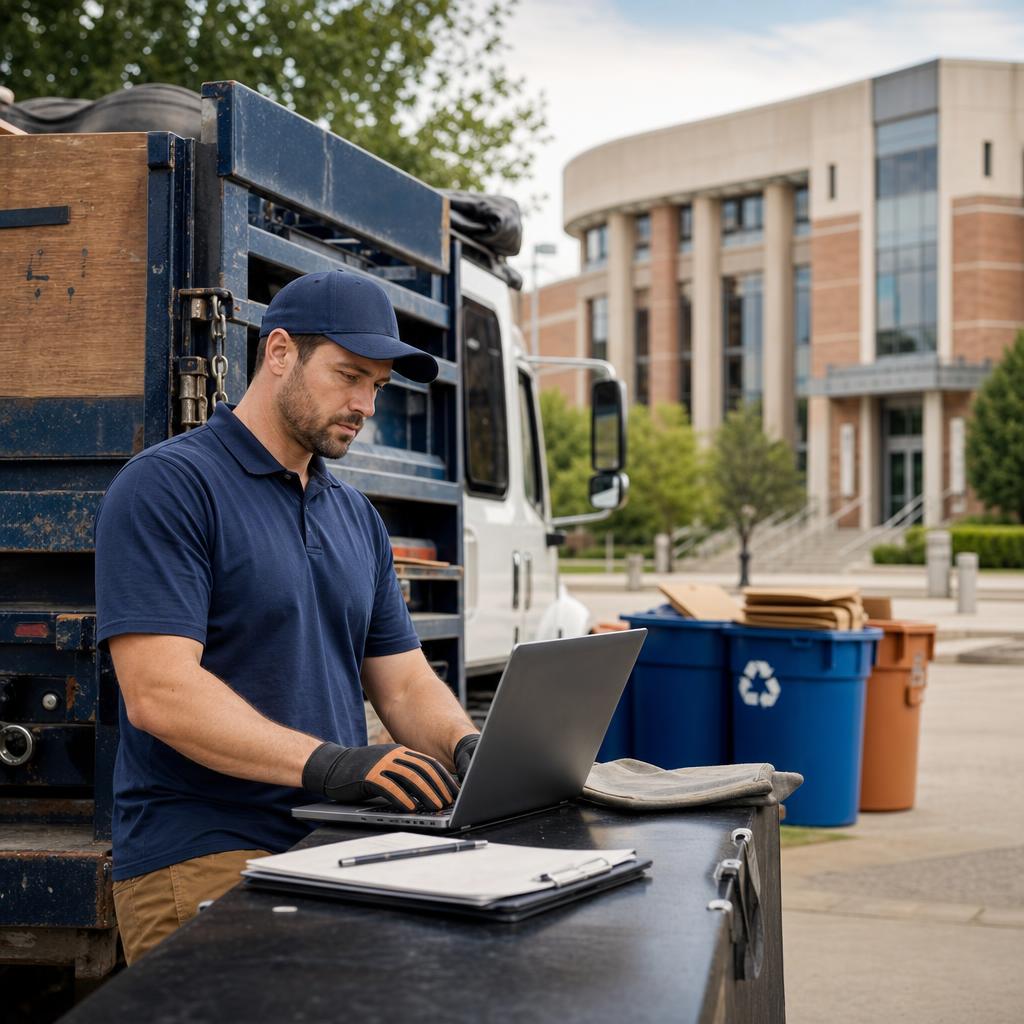
For junk removal companies, the distinction between ordinary trash and recoverable material matters. A property manager may need a scheduled cleanout, a construction project may need separated debris handling, and a resident may need a route for furniture or appliances that do not belong in a standard cart. A clear intake process helps route each request to the correct service instead of sending everything to a landfill by default.
Denver residents and property managers can use the Junk Removal Club directory to find local haulers and can use the dump-site finder to research disposal and facility options. Always confirm accepted materials and current hours directly with the facility or hauler before making a trip.
Denver URCO September 1 Readiness Checklist
Use this checklist as a starting point. The applicable official Denver category page controls the final details.
- ☐ Identify whether the site is multifamily, non-residential, food-related, an event, or a qualifying construction/demolition project.
- ☐ Confirm the September 1, 2026 effective date and any category-specific deadlines.
- ☐ Review the current waste contract and accepted-material lists.
- ☐ Provide the required recycling and/or composting service.
- ☐ Put the right container sizes and pickup frequency in place.
- ☐ Label every stream clearly with words and symbols.
- ☐ Post current sorting guidance in English and Spanish where required.
- ☐ Create a container, enclosure, and pad-cleaning schedule.
- ☐ Train employees, contractors, residents, tenants, vendors, or event staff.
- ☐ Set reminders for the November 30 multifamily education deadline and 30-day move-in or service-change windows.
- ☐ Keep notices, service agreements, receipts, weight tickets, plans, and training records.
- ☐ Review Denver’s latest official guidance before relying on an older checklist or vendor explanation.
Where to Verify the Current Rules
Denver’s official pages are the best place to confirm the version of the requirements that applies to your situation:
- Denver’s URCO overview
- Multifamily residential requirements
- Multifamily compliance checklist
- Non-residential building requirements
- Food waste producer requirements
- Permitted event requirements
- Construction and demolition requirements
Frequently Asked Questions
When does Denver’s Universal Recycling and Composting Ordinance take effect?
Denver’s updated URCO requirements take effect September 1, 2026. Different property and activity categories have their own practical steps and deadlines, so owners, managers, businesses, event organizers, and contractors should review the category-specific Denver guidance before the effective date.
Does URCO apply to every Denver resident?
URCO requirements are generally implemented through qualifying properties, businesses, events, and construction projects rather than a new individual permit for every resident. Residents in covered multifamily buildings should receive access to the required services and clear sorting instructions, then use those services correctly.
What apartment buildings are covered by Denver URCO?
Most multifamily residential properties with eight or more units are covered, including many apartment and condominium properties. Manufactured-home communities and congregate or boarding homes may also be covered. Property owners and managers should use Denver’s official property guidance to confirm how a specific site is classified.
What construction projects have to follow URCO diversion requirements?
Denver identifies new construction and demolition projects larger than 500 square feet, and permitted interior remodel projects larger than 2,500 square feet, as covered project types. Qualifying projects must meet reuse and recycling requirements for debris and materials.
Bottom line: Denver URCO turns recycling and composting from an optional amenity at many properties into a planned service that needs containers, signs, education, maintenance, and reliable follow-through. Start by identifying your category, then use Denver’s official checklist to close the gaps before September 1, 2026.